Back to the Tropics Part 3 of 5: Sound the Staghorn!
- milestoh22
- Feb 12, 2022
- 3 min read
Updated: Mar 9, 2022


This second nursery, Frangipani Gardens, Ipoh is a specialist nursery offering large specimens like frangipani & palms, and garden design services, but the real passions of its owner, Edward, are staghorn ferns and air-plants.
STAGHORN FERNS (Platycerium genus)
These are everywhere in this nursery with new hybrids right through to mature staghorns, proudly displaying all their fronds, attached to the trunk of majestic raintrees or hung from their branches above.
Staghorn Ferns - various species and hybrids


Baby Staghorn nursery


They are part of the Polypodiaceae family. Although there are only 18 wild species of Staghorn fern (Platycerium genus), breeders, like Edward, have created many hybrids and varieties of those species. Do read more at Gardening Know How: Staghorn Fern Varieties:
The staghorn fern is epiphytic, that is, it likes to attach itself to trees and we replicate this by attaching them to wooden boards. Perhaps the most unique thing about them is that they have two distinct types of leaves.
The first type of leaf is flat like a shield and takes up nutrients and water.
The second type of leaf is more green and pronged, starting from the base. Some species can grow very long fronds over the years.
We can demonstrate this variation with these 2 mature staghorns under our porch below.
Staghorns at home in Malaysia
LEFT:P. Mt kitshakood (hybrid cross of P. ridleyi and P. coranarium) with long fronds
RIGHT: Platycerium bifurcatum (Common Staghorn)


The Common Staghorn Platycerium bifurcatum has heart-shaped sterile fronds and grey-green, arching, fertile fronds to 90cm in length, forked into strap-shaped segments, bearing brown spore patches beneath the tips. It grow epiphytically in equal parts of leaf mould, coarse peat, sphagnum moss, loam and charcoal. Although they can be trained to live in full sunlight, they prefer filtered morning light and indoors, they will survived in indirect sunlight. When in growth, water freely in high humidity (mist and drench regularly and let them drip dry). Water sparingly in winter. It is grown outdoors epiphytically in the tropics as above. I hung this one up using bungee cords and a net which I think is kinder than using chains. In UK, this could survive down to -4˚C for short periods, but I would take this into a greenhouse or indoors for winter.

I bought this small Staghorn fern recently. This is a hybrid P. diversifolium, a cross of P. bifurcatum and P. hillii, which results in these wider fronds. As this is now being looked after indoors in UK, this gives me the opportunity to talk about how to care for Staghorns as houseplants.

The pictures above show how the Staghorn on the right which loves tropical humidity is thriving but becomes a little sorry for itself once it goes indoors in a dry heated home, where the ambient humidity was only 54% as measured below. It needed misting daily and I therefore repositioned it above a fish tank where the humidity is now 61% and he is much happier! A tray of water with pebbles below it would have the same effect.


As for feeding staghorns, Edward recommended a balance slow release feed and I use an Osmocote controlled release plant food tablet placed behind the sheild which will last for 6 months. In addition, a tip I learnt is that they like slightly acidic food, so a slice of banana peel is welcomed. As the shield grows, I will nail a larger wooden board to the existing one to accommodate it.
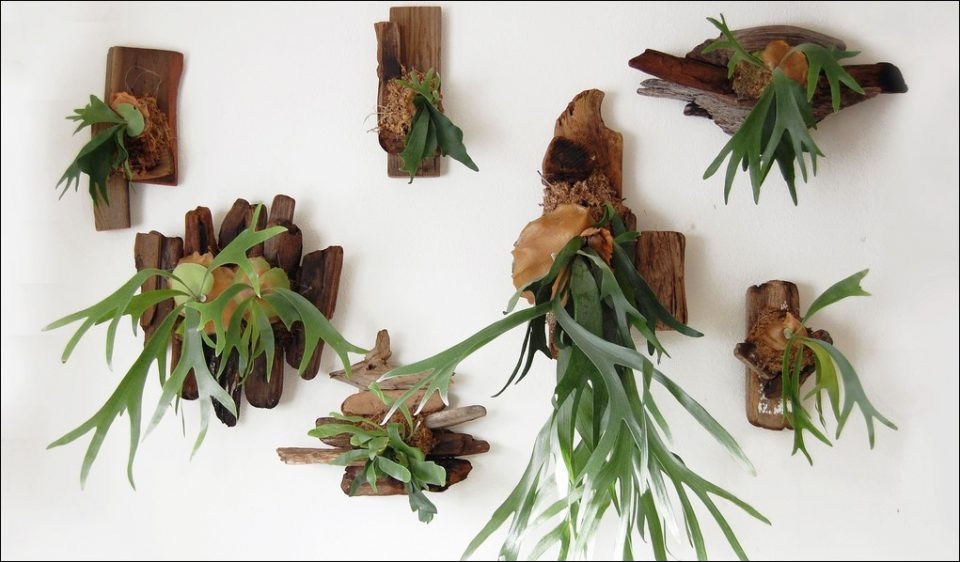
This image from the web shows us why staghorns are adored as indoor plants - they come in eclectic shapes and sizes and the stunning driftwood boards display them at their finest. Looked after well, staghorns will give years of pleasure - new growths called pups will form and these can be removed to form new staghorns you can propogate or give away as living presents.

Staghorns are sometimes sold as potted specimens like this one. In that case, they will need less watering so are easier to care for, but otherwise do give them fertiliser and indirect light just like the mounted ones.
AIR-PLANTS

Back to our first love that started this blog. As we give our air-plants their soak baths today (and drip dry here) to revive them before spring, I recall the many air-plants I saw at this nursery.


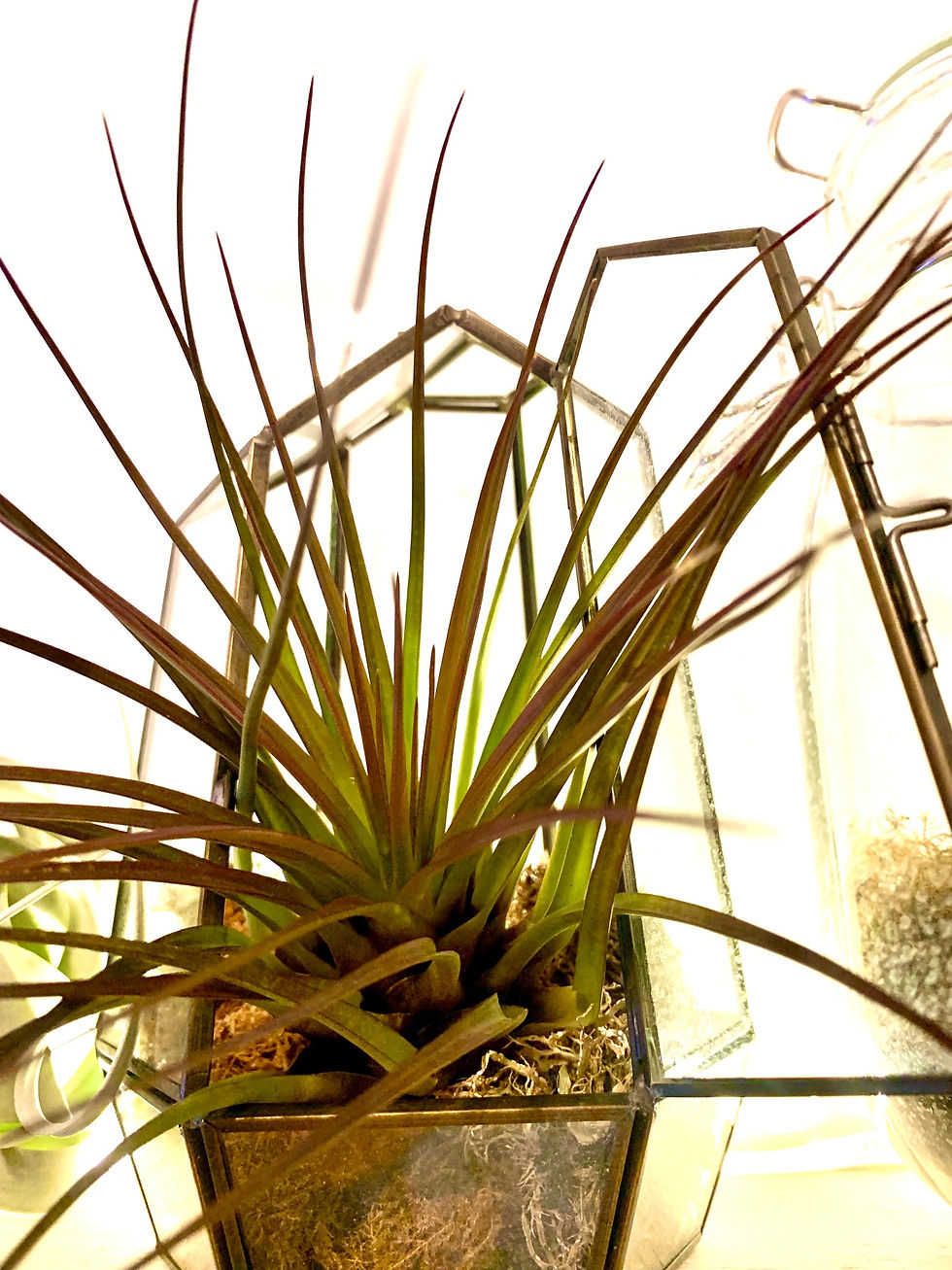
The air-plants below just bask in the humid warm climate of Malaysia and grow on to become enormous specimens. I found this both inspirational and aspirational (alright I admit feeling envious too!).


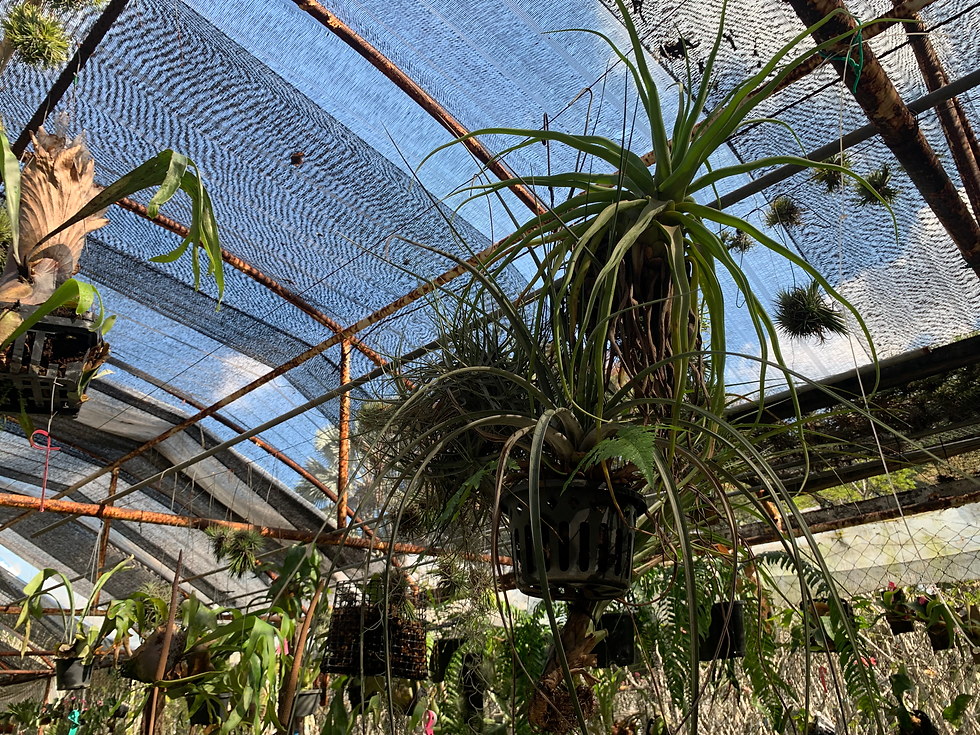
Till next time, when we will visit a beautiful secret tropical garden nursery together, do carry on happy wacky planting!
Dad of MIles 👱♂️💜🌴


Comments