Back to the Tropics - Part 2 of 5: Treasure Troves of the Tropical Nurseries
- milestoh22
- Feb 5, 2022
- 4 min read
Updated: Feb 8, 2022

I promised you a blog on visits to nurseries in the tropics and here are some in Ipoh, Malaysia. There are over 20 here but I will feature just three that represent the types of nurseries here: the 'no-frills' traditional ones that are dotted throughout the countryside, to the more specialist growers, through to the high-end 'life-style' plant emporia found in the suburbs that cater to the more discerning customer. My preference is always the former, as there is nothing like scrabbling around in these chaotic Aladdin’s caves to find that rare plant (often for a bargain), and meeting the dedicated, sometimes eccentric, individuals who run these establishments.
On one such visit, we found this hanging Tan Hua cactus at a great price (£4) (see previous blog) that was just about to bloom (and did so soon after).

Plant nurseries here used to just sell common-or-garden plants we see in any tropical garden - bougainvillaea, orchids, hibiscus, and classic foliage plants like caladiums, coleus, dumb cane and anthurium. Not any more. Plants that I never saw as a child have crossed from the temperate to the tropics and we now have hydrangeas in our garden and even poinsettias on sale over Christmas.

Common tropical plants - orchids, bougainvillae and the desert rose, Adenium obesum
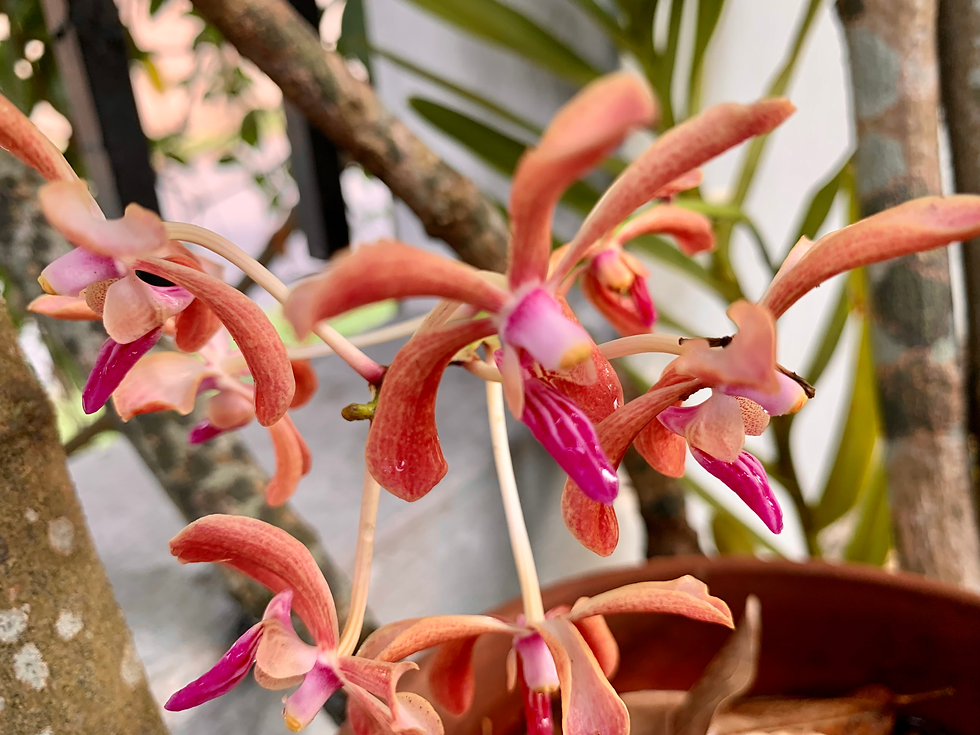


Bougainvillae

Adenium obesum

My mother particularly loves these desert roses and they have always been in our garden, with several specimens like the one above that is over 20yrs old. In the tropics, they continually blossom all year. As a houseplant in UK, they are dormant in winter and bloom only in the summer. They should be given as much sunlight as possible, including leaving it out in the summer (above 8°C), allowing the compost to dry between drenching with water - this replicates the good soak they like from the monsoon rains.
MEMORIES OF FRANGIPANI
The most exciting change I have seen in plants for sale here is the huge variety of unusual plants that we can now buy. This fortunately reflects our very interests - air-plants, succulents, cacti and even staghorn ferns, which will feature in our next blog. Large trees like frangipani, palms and perfectly cut topiary are everywhere for that instant landscaped look. By the way, I am particularly fond of the fragrance of the frangipani flower, which has been variously liken to roses, gardenias, pineapple, plum, citrus, ripe banana, grapes, coconut, ginger and even candy. It brings me back instantly to happy memories of many a hot afternoon climbing this tree in my grandparents' garden with my cousins. They come in a variety of colours, and here are 3 in our garden:


NURSERY #1 (Jalan Ghazali Jawi, Ipoh)
This first nursery is traditional and typically, has plants everywhere in no particular order. They encourage you to wander, rummage and discover.
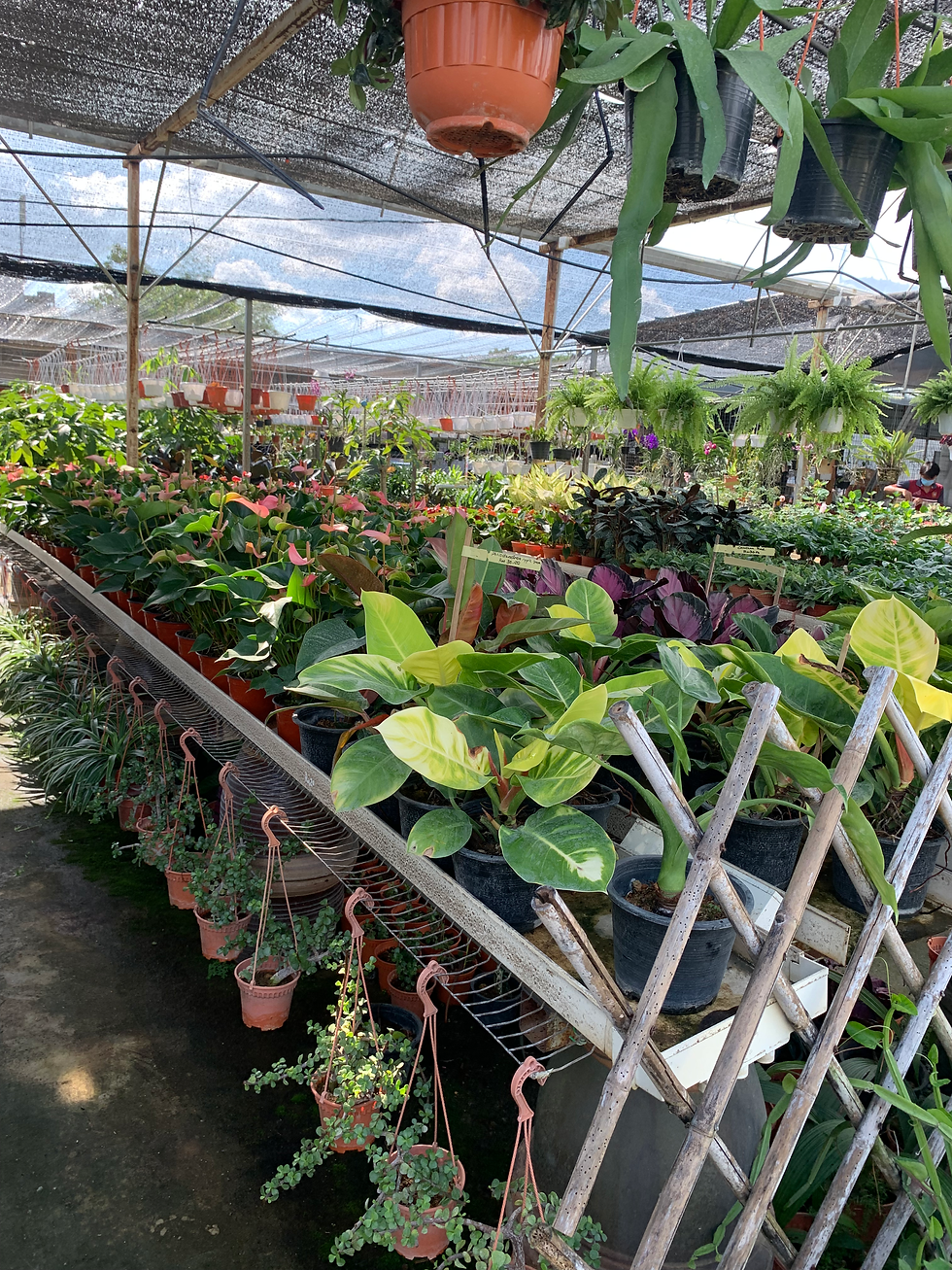
Above, there are pink Anthuriums next to purple Calathea roseopicta and variegated Dieffenbachia (Dumb Cane) with flowering cacti above and Nephrolepsis (Boston Fern) at the back


Caladiums with dazzling colours and intricate patterns can be found here, more variety than you will ever see in the UK. Here are some examples from our very own garden:


In the tropics, these are evergreen all year. In the UK, Caladiums can be grown outdoors in the summer and tubers either lifted in autumn or they could be brought indoors when it gets cold. They will survive in medium light in winter (but are likely to rest and not produce new leaves), need high humidity ( a tray with water and pebbles helps), away from drafts. Feed in summer only and allow soil to dry out between watering. Water sparingly in winter.
Exploring further, I found these glorious Petrea volubilis (Giant Queen’s Wreath Vine) with purple and green racemes, and loads of Tradescantia zebrina, similar to ours which has been growing rapidly at home in UK, even in winter! We will show this to you another time but have had to move the Wandering Dude into the conservatory onto a perch of his very own.
Petrea volubilis


Tradescantia zebrina
Calathea roseopicta


Calathea 'Beauty Star'
There was also a huge range of colourful Calatheas. We love these colourful easy-care houseplant which are perfect for beginners.
Finally, I found 3 unusual plants, right at the back, that deserve a mention.
Crinum asiaticum
This is also known as Crinum superbum (don't ask!). It is a water-loving plant and is a member of the lily family, Amaryllidaceae. It is like an onion (non-edible) and is associated with the Lunar New Year in view of the fact that it resembles a leek (which is an auspicious vegetable for the Chinese). As a result, it has become highly prized and even this dwarf specimen costs over £30. It is a shade-loving plant but I have no idea if it will grow well as an indoor houseplant in UK (if you know, get in touch!).

2. Caladium Praetermissum (Alocasia Hilo Beauty)
Spotted this spotty Caladium on the ground - this sought-after alocasia costs over £25 even in this budget nursery. It is a member of the philodendron family with heart-shaped leaves resembling elephant ears. Like all alocasias, they prefer indirect light/shade and letting their soil dry between waterings.

3. Echeveria Macdougallii


I found this sitting on the table right next to the nursery hut door. It was absolutely irresistible in this perfect China tea-cup. This succulent, which grows to about 30cms, has pink rosettes surrounded by fleshy jelly-bean leaves. Like all echeveria, keep it dry above and water sparingly from below into the dish and let it dry out between waterings. It likes sunlight so do keep it on a bright windowsill. This one now sits happily in my parent's air-well on the table next to me whilst I wrote this blog.
Happy days!
If you enjoyed this blog, do 'like' us and subscribe!
Till next time,
👦🏻 💜 🌵


Comments